Why cybersecurity gifts make sense in 2026
Every year, data breaches and phishing scams hit the headlines, and most people still protect their accounts with nothing but a reused password. That makes cybersecurity gifts in 2026 some of the most practical presents you can give: they are affordable, they get used every single day, and they genuinely make the recipient safer. Instead of another gadget that gathers dust, these five picks help friends and family lock down their accounts, cameras, and wallets.
1. YubiKey 5 NFC — the gold standard of account security
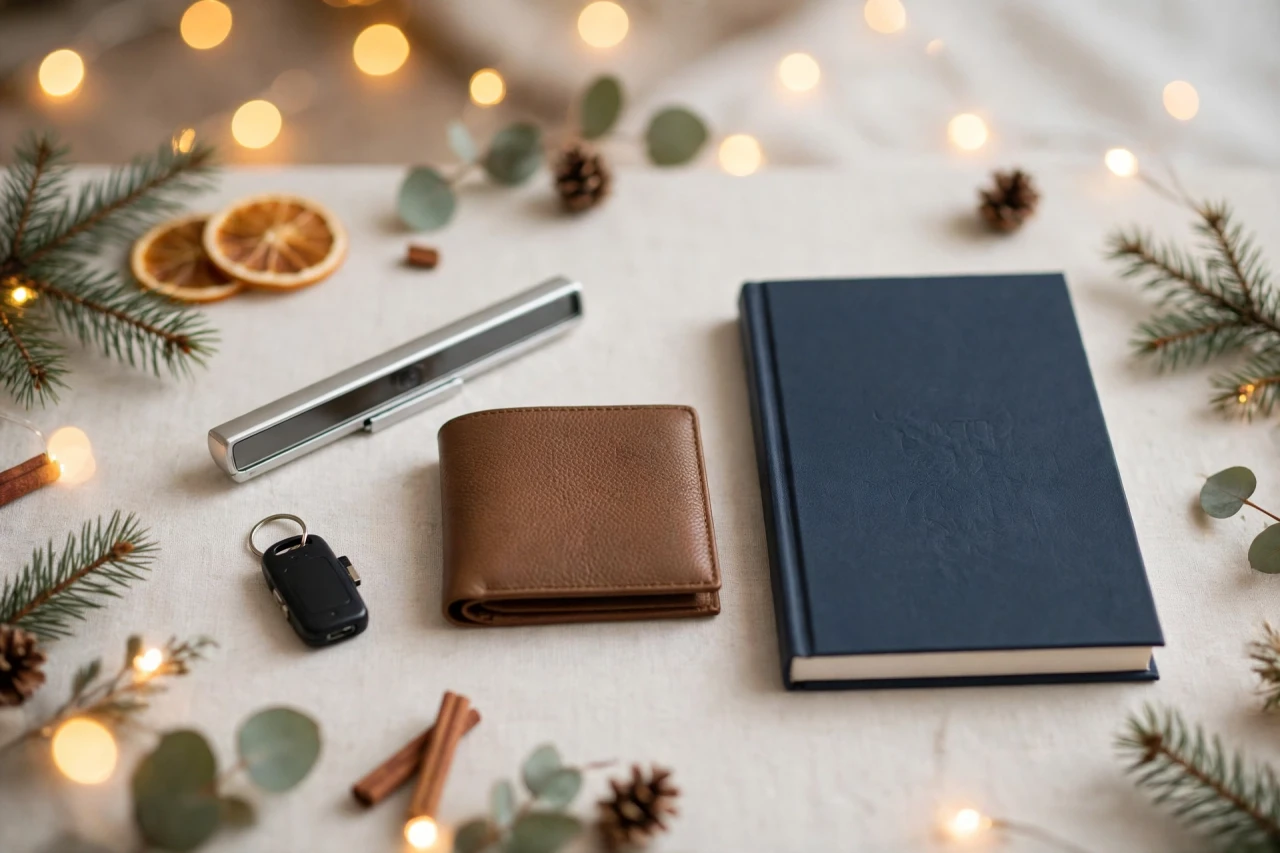
The YubiKey 5 NFC is a tiny hardware security key that plugs into USB-A or taps a phone via NFC. It replaces weak SMS codes with phishing-resistant login for Google, Microsoft, Apple, and hundreds of other services.
Pros: works with virtually every major account; no batteries or apps required; IP68-rated and nearly indestructible.
Cons: costs more than basic keys (around $58); you should buy two — one main, one backup.
2. Yubico Security Key C NFC — the budget-friendly starter
For someone who has never used a security key, the Yubico Security Key C NFC is the perfect entry point. It uses the same phishing-resistant FIDO2 technology as the YubiKey 5 series, just in a FIDO-only package, at roughly half the price (around $29).
Pros: USB-C plus NFC fits modern phones and laptops; extremely simple — plug in, tap, done.
Cons: no smart-card (PIV) or OpenPGP features; keep it as a backup key once they upgrade.
3. CloudValley webcam cover slider — a stocking stuffer that stops spying
At under ten dollars for a two-pack, the CloudValley metal webcam cover slider is the cheapest real privacy upgrade on this list. It sticks over a laptop or tablet camera and slides open only when you need video — no tape, no residue.
Pros: ultra-thin (0.023 inch) so laptops still close flat; metal slider feels premium; fits laptops, tablets, and phones.
Cons: it is adhesive, so repositioning it a few times weakens the stick; buy the two-pack to cover two devices.
4. Travelambo RFID-blocking wallet — privacy for their pocket
Contactless payment cards can be skimmed wirelessly in crowded places. The Travelambo Slim RFID-blocking wallet is just 0.12 inches thick, holds six cards, and its lab-tested shielding blocks 13.56 MHz RFID scans from credit cards, debit cards, and IDs.
Pros: genuinely slim — disappears in a front pocket; hand-crafted leather look at a budget price (around $10); well-reviewed by travelers.
Cons: limited to six card slots, so minimalists only; does not block low-frequency (142 kHz) badges like hotel keys.
5. The Art of Invisibility by Kevin Mitnick — the privacy book
Not every great security gift is hardware. Kevin Mitnick's The Art of Invisibility is the classic, readable guide to protecting your privacy online — passwords, Wi-Fi, and the ways companies and criminals track you. It is the kind of book that makes the reader safer for years after they finish it.
Pros: engaging true-life stories, not a dry manual; works for any skill level.
Cons: some of the tools and services mentioned have changed since publication — pair it with a hardware pick from this list.
Quick comparison
| Gift | Best for | Typical price |
|---|
| YubiKey 5 NFC | Serious account protection | ~$58 |
| Yubico Security Key C NFC | First security key | ~$29 |
| CloudValley webcam cover | Stocking stuffer | Under $10 (2-pack) |
| Travelambo RFID wallet | Travelers and commuters | ~$10 |
| The Art of Invisibility | Readers and curious minds | Varies by edition |
Prices vary by retailer and change often — treat these as starting points.
Conclusion
Cybersecurity gifts work because they solve a problem everyone has but few people fix on their own. Any one of these five will make the recipient genuinely safer in 2026 — and the security keys in particular are gifts people keep using for years.
Disclosure: This post contains affiliate links. If you buy through them, I may earn a commission at no extra cost to you.
As an Amazon Associate I earn from qualifying purchases.




Comments
Post a Comment