Print-on-demand (POD) is one of the few online businesses you can genuinely start with $0 upfront. There's no inventory to buy, no warehouse, and no shipping to handle yourself. You create designs, a POD company prints and ships them when customers order, and you keep the margin. Here's how to start a print-on-demand store with no upfront costs in 2026 — and the honest truth about what it takes to make it work.
How print-on-demand actually works
You upload a design to a POD platform, choose products (t-shirts, hoodies, mugs, posters, tote bags), and set your retail price. The platform charges you a base cost only when an order comes in — printing, the blank product, and shipping are all handled. Your profit is the difference between your price and the base cost. If nobody buys, you pay nothing. That's why the startup cost is zero.
Step 1: Pick a niche before you pick a product
The biggest POD mistake is selling "funny t-shirts" to everyone. The stores that work target a specific identity or interest: nurses, dog owners, fishing enthusiasts, retro gamers, new moms. A tight niche means your designs speak directly to a buyer, your marketing is obvious, and you can charge more. Spend an hour brainstorming 10 niches you understand personally — insider knowledge of the audience is your edge.
Step 2: Choose your platform (free options)
For a true zero-cost start, you have two main paths:
- Etsy + a POD partner (like Printful or Printify): You get built-in buyer traffic. Etsy charges a $0.20 listing fee per item, a 6.5% transaction fee, and about 3% + $0.25 in payment processing — so it's not literally free per sale, but there are no monthly fees to start, and new shops pay a small one-time setup fee (around $15–$29). Digital-first sellers often start here.
- Your own store (Shopify/own site): More control and branding, but monthly fees and zero built-in traffic — harder for beginners.
Most beginners start on Etsy because the traffic is already there. Just price your products so the ~10–12% total Etsy fees don't eat your margin: a $25 shirt with a $12 base cost leaves you roughly $10 after fees.
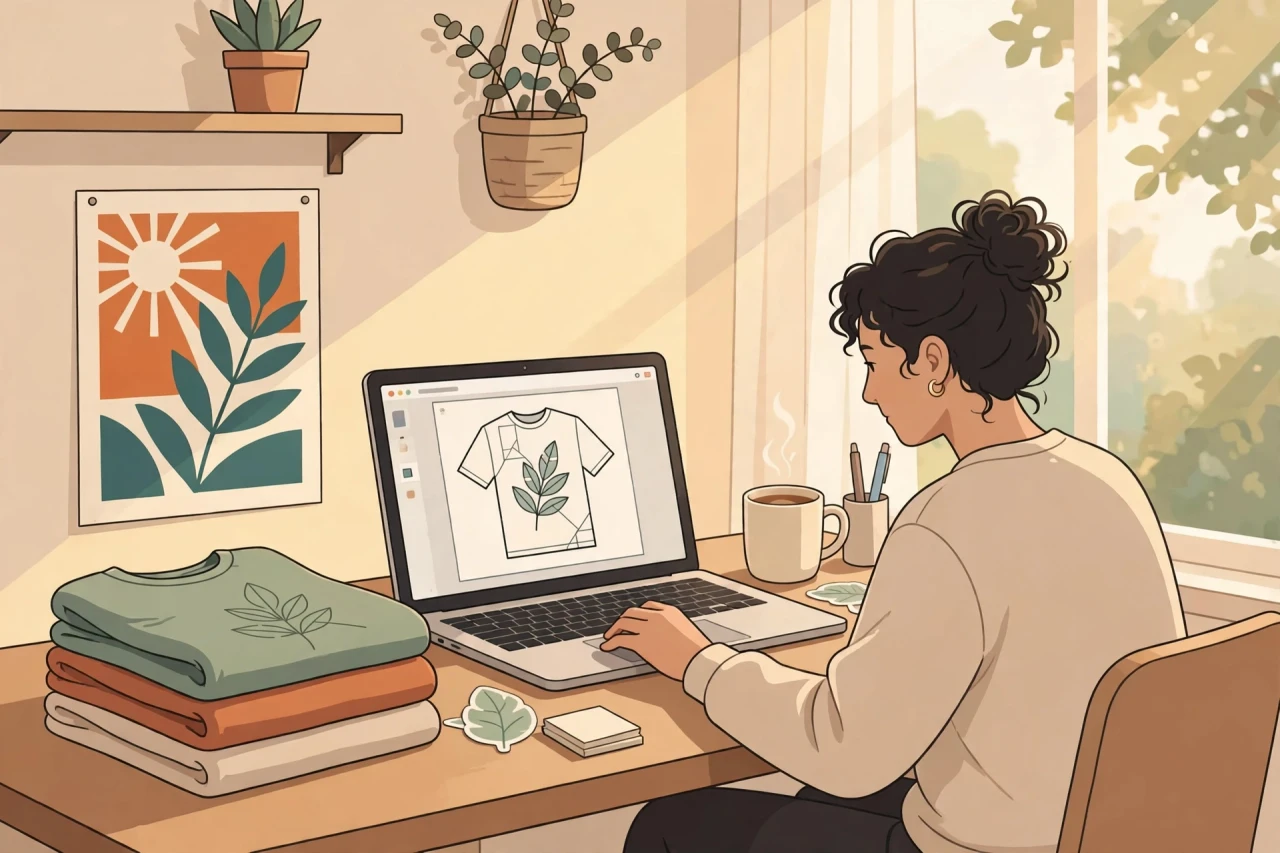
Step 3: Create designs without design skills
You don't need to be an artist. Winning POD designs are usually simple: bold text-based designs, minimalist graphics, or niche inside jokes. Free tools like Canva (plus its huge template library) are enough to start. Study the bestsellers in your niche for style cues — not to copy, but to understand what that audience buys. Aim to launch with 20–30 designs; volume matters because each design is a lottery ticket.
Step 4: Write listings that get found
Etsy is a search engine. Your title's first 55 characters matter most — put your main keyword there ("Funny Nurse T-Shirt" not "Awesome Gift Idea!!!"). Fill all 13 tags with specific phrases buyers type. Use all 10 image slots with clean mockups (your POD partner generates these free). Good SEO on Etsy is free traffic, and it's the difference between 0 and 100 sales.
Step 5: Market on one channel
Pick one: TikTok/Instagram Reels showing your designs, or Pinterest pins linking to your listings. Post consistently for 90 days before judging results. POD is a volume-and-time game — most stores that quit do so in month two, right before traction starts.
The honest reality
Print-on-demand with no upfront cost is real, but "passive" is a stretch at the start. Expect 2–4 months of consistent uploading and marketing before meaningful sales, and treat your first 50 designs as tuition. For a realistic, no-hype primer on building a tiny business from scratch, The $100 Startup by Chris Guillebeau (Affiliate link — I may earn a commission at no extra cost to you.) is a practical read. Sellers who treat it like a real store — researching niches, studying competitors, improving listings — can build a genuine $500–$2,000/month side income within a year. Those looking for overnight money will be disappointed. The barrier to entry is zero, which means the barrier to success is effort and patience.
Disclosure: This post contains affiliate links. If you buy through them, I may earn a commission at no extra cost to you.
As an Amazon Associate I earn from qualifying purchases.




Comments
Post a Comment